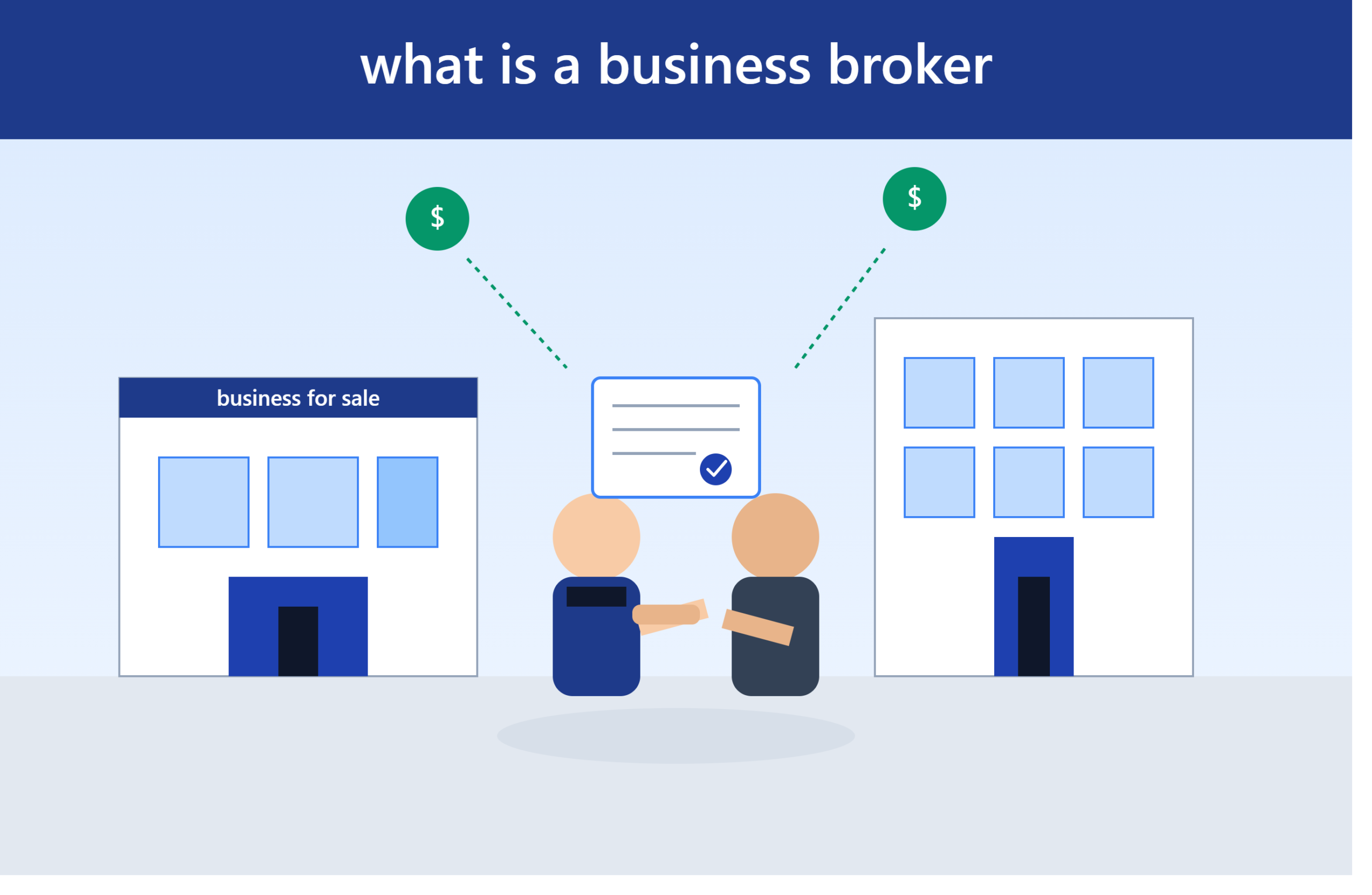
A business broker is a licensed professional who act as intermediary between business owners who want to sell their companies and qualified buyers seeking acquisition opportunities. The business broker not only helps in connecting buyers and sellers, they help to determine a fair market value, confidentially market the business, screen potential buyers, negotiate favorable terms, coordinate due diligence, and guide both parties toward a successful closing.
The responsibilities of a business broker extend well beyond advertising a business for sale.
Professional brokers serve as advisors, negotiators, project managers, and transaction specialists who coordinate multiple stakeholders, including:
Throughout the transaction, the broker ensures that each stage progresses smoothly while protecting the interests of their client.
A business broker’s expertise helps reduce common risks such as:
Because business sales involve both financial and operational complexities, brokers combine market knowledge with transaction management skills to increase the likelihood of a successful outcome.
Business brokers provide a comprehensive range of professional services before, during, and after a transaction.
One of the broker’s first responsibilities is determining a realistic market value for the business.
This process considers multiple factors, including:
Rather than relying solely on revenue multiples, experienced brokers evaluate the complete financial and operational profile of the business.
The resulting valuation helps establish a pricing strategy that attracts qualified buyers while maximizing value for the seller.
Before marketing begins, brokers help organize important documentation such as:
Preparing these documents early improves buyer confidence and accelerates due diligence later in the process.
Maintaining confidentiality is one of the most important aspects of selling a business.
Employees, customers, suppliers, and competitors should not learn prematurely that a business is for sale.
Professional business brokers therefore market businesses confidentially by:
Confidential marketing protects business continuity while allowing qualified buyers to evaluate acquisition opportunities.
Not every interested prospect is capable of purchasing a business.
Business brokers evaluate buyers based on:
This screening process reduces wasted time and increases the probability of closing a transaction.
Negotiation extends far beyond discussing price.
Business brokers help negotiate:
Their objective is creating an agreement acceptable to both buyer and seller while preserving transaction momentum.
Once an offer is accepted, buyers perform detailed due diligence.
This includes reviewing:
The broker coordinates communication between both parties to ensure documentation is delivered efficiently and accurately.
The closing process involves coordinating multiple professionals, including:
The broker helps ensure all required documents are completed before ownership officially transfers.
Business brokers serve many different types of clients.
Owners approaching retirement often hire brokers to maximize the value of decades of work while ensuring a smooth ownership transition.
Serial entrepreneurs frequently use business brokers when exiting one venture to pursue another investment opportunity.
Family-owned businesses often require independent guidance during succession planning or ownership transfers.
Private investors rely on brokers to identify acquisition opportunities that match their investment criteria.
Many first-time buyers lack experience evaluating businesses.
A broker helps them understand financial statements, business risks, valuation methods, and negotiation strategies.
Business brokers work across nearly every industry.
Common examples include:
Manufacturing companies often involve:
Business brokers coordinate these more complex transactions with specialized expertise.
Construction-related businesses commonly sold include:
Digital businesses have become increasingly popular acquisition targets.
Examples include:
Because these businesses rely heavily on recurring revenue, customer acquisition, intellectual property, and digital assets, valuation methods often differ from traditional brick-and-mortar companies.
Many owners initially consider selling their businesses independently.
However, managing a sale while operating the business full-time is often difficult.
Professional brokers provide several advantages:
Most importantly, brokers allow business owners to continue running their companies while the sale process progresses behind the scenes.
A common misconception is that business value equals annual revenue.
In reality, buyers evaluate a combination of financial performance, operational stability, market position, and future earning potential.
Factors influencing value include:
Business brokers analyze these factors collectively to determine a realistic asking price that reflects both current performance and future potential.
This valuation serves as the foundation for the entire transaction and influences buyer interest, financing options, negotiation strategy, and ultimately the likelihood of a successful sale.
Selling a business is not a single event—it is a structured transaction consisting of multiple stages that require careful planning, financial analysis, legal documentation, negotiation, and coordination between numerous professionals. Every successful business sale follows a process designed to maximize value, protect confidential information, reduce risk, and ensure a smooth ownership transition.
Although every transaction is unique, most business sales follow these key stages.
The process begins with a consultation between the business owner and the business broker.
During this stage, the broker gathers information about:
Understanding these characteristics helps the broker determine whether the business is ready for sale and identify areas that may need improvement before entering the market.
For example, a broker may recommend:
Preparing the business before listing often leads to stronger buyer confidence and a higher selling price.
A professional valuation is one of the most important steps in the selling process.
Pricing a business too high discourages qualified buyers and can cause the listing to remain unsold for an extended period.
Pricing it too low may result in the owner leaving significant value on the table.
Business brokers evaluate several categories when determining value.
Buyers analyze the company’s ability to generate sustainable income.
Important financial metrics include:
Value may include:
Many businesses derive substantial value from intangible assets, including:
Industry demand also influences valuation.
Businesses operating in rapidly growing industries often command higher valuation multiples than businesses in declining sectors.
Other market factors include:
Rather than relying on a single formula, experienced business brokers combine financial analysis, industry benchmarks, comparable transactions, and market trends to recommend an asking price that reflects both current performance and future earning potential.
Before introducing the business to buyers, brokers prepare professional marketing documents.
These often include:
The Confidential Information Memorandum provides qualified buyers with an overview of the business after they have signed a Non-Disclosure Agreement (NDA).
A comprehensive CIM typically includes:
Before an NDA is signed, brokers usually advertise the business without revealing its identity.
An anonymous profile may include:
This protects the seller’s confidentiality while attracting serious buyers.
One of the defining characteristics of professional business brokerage is confidential marketing.
If employees, customers, suppliers, or competitors learn too early that a business is for sale, several problems may occur:
Business brokers therefore implement confidentiality procedures throughout the marketing process.
These often include:
Maintaining confidentiality protects both the seller and the ongoing value of the business.
Finding buyers is far more complex than posting an advertisement online.
Professional business brokers actively search for buyers through multiple channels.
Many brokerage firms maintain databases containing investors who have previously expressed interest in acquiring businesses.
These buyers may already have:
Competitors sometimes expand through acquisition.
Industry buyers often seek businesses to:
Private investors frequently purchase established businesses because they offer immediate cash flow compared to starting a new company from scratch.
Many buyers choose acquisition over starting a business because purchasing an existing company provides:
Not every inquiry represents a serious buyer.
Professional brokers evaluate each prospect before providing confidential information.
Buyer qualification generally includes reviewing:
Can the buyer afford the acquisition?
This may involve reviewing:
If financing is required, brokers determine whether the buyer is likely to qualify for:
Some businesses require industry knowledge.
For example:
A buyer interested in acquiring a medical practice may need licensing requirements or management experience that differs significantly from purchasing a retail store.
Business brokers also assess:
Screening buyers saves time and protects confidential information.
Before confidential information is released, buyers usually sign a Non-Disclosure Agreement.
The NDA legally prohibits buyers from disclosing information about:
This document protects the seller while allowing buyers to evaluate the opportunity.
After signing the NDA, qualified buyers receive additional information.
They evaluate:
If interested, buyers typically schedule meetings with the broker and eventually the seller.
When a buyer decides to move forward, they often submit a Letter of Intent (LOI).
Although the LOI is generally non-binding, it establishes the framework for negotiations.
Typical LOI terms include:
The LOI provides clarity before both parties invest significant time and expense into the transaction.
Negotiation involves much more than agreeing on price.
Experienced business brokers negotiate many components of the transaction, including:
Professional negotiation helps create agreements that satisfy both parties while reducing the likelihood of disputes later.
Due diligence is the buyer’s opportunity to verify that the business performs as represented.
This stage often determines whether the transaction proceeds to closing.
Buyers may review:
The business broker coordinates document requests, schedules meetings, and facilitates communication to keep the process organized and on schedule.
Many business purchases involve financing rather than an all-cash transaction.
Understanding the available financing options helps both buyers and sellers structure deals that are practical and financially sustainable.
Government-backed financing programs are commonly used for small business acquisitions. These loans often provide favorable repayment terms and lower down payment requirements compared to conventional commercial financing.
Banks and financial institutions may finance business acquisitions for borrowers with strong credit profiles, sufficient collateral, and proven management experience.
Seller financing occurs when the business owner agrees to finance a portion of the purchase price.
This arrangement can:
Seller financing is frequently combined with bank financing or cash down payments.
Some acquisitions are completed entirely with available cash.
Cash transactions often move faster because financing approval is unnecessary, although buyers still conduct comprehensive due diligence before closing.
After due diligence has been successfully completed and all contingencies have been satisfied, the transaction moves into the closing phase. This is the point at which ownership of the business is legally transferred from the seller to the buyer.
Although reaching this stage indicates that both parties have agreed on the major terms, several important tasks must still be completed before the sale can officially close.
A business broker coordinates communication among attorneys, accountants, lenders, escrow agents, landlords, insurance providers, and both parties to ensure that every requirement is completed on schedule.
Typical closing activities include:
By overseeing these tasks, the broker helps reduce delays and ensures a smooth transition of ownership.
Business sales involve significantly more documentation than many owners expect. The exact documents depend on the size of the transaction, the industry, and whether the sale is structured as an asset sale or a stock sale.
Common documents include:
Protects confidential business information before detailed financial and operational records are shared with prospective buyers.
Provides qualified buyers with a comprehensive overview of the business, including financial performance, operations, assets, market position, and growth opportunities.
Outlines the proposed purchase terms before definitive legal agreements are drafted.
Typical provisions include:
In an asset sale, the Asset Purchase Agreement specifies exactly which assets and liabilities are being transferred.
Examples include:
When ownership interests or shares are being transferred instead of individual assets, a Stock Purchase Agreement governs the transaction.
Officially transfers ownership of tangible business assets to the buyer.
Many buyers require the seller to agree not to open or work for a competing business within a defined geographic area and time period.
The seller may agree to remain involved for a specified period after closing to train the buyer and ensure operational continuity.
Although the terms are sometimes used interchangeably, business brokers and Mergers & Acquisitions (M&A) advisors typically serve different segments of the market.
Business Broker | M&A Advisor |
Focuses primarily on small and lower middle-market businesses | Focuses on middle-market and large companies |
Represents privately owned businesses | Represents corporations and institutional sellers |
Frequently works with owner-operated companies | Often handles private equity and strategic acquisitions |
Uses SDE and EBITDA valuation methods | Primarily relies on EBITDA and advanced financial modeling |
Coordinates individual buyers and entrepreneurs | Coordinates institutional investors, strategic buyers, and investment groups |
In general:
Both professionals facilitate business transfers, but the scale, buyer profile, and transaction complexity differ significantly.
Many people assume that selling a business is the same as selling commercial property. While there is some overlap, these professions have different primary objectives.
A commercial real estate broker focuses on real property, including:
A business broker focuses on the operating business itself, including:
If a business operates from a commercial property, the transaction may involve both professionals. For example, the business broker manages the sale of the operating business, while the commercial real estate broker assists with the transfer or sale of the underlying property.
Business brokers work across a wide range of industries, each with unique valuation methods, operational considerations, and buyer expectations.
Construction companies often possess valuable equipment, experienced employees, long-term contracts, and recurring commercial relationships.
Examples include:
Professional service firms typically derive value from recurring clients, reputation, and specialized expertise.
Examples include:
Healthcare transactions require careful consideration of licensing, regulatory compliance, insurance contracts, and patient confidentiality.
Examples include:
Hospitality businesses are commonly purchased by entrepreneurs seeking established customer bases.
Examples include:
Retail businesses continue to represent a significant portion of small business transactions.
Examples include:
Manufacturing businesses often involve larger transactions because buyers evaluate production capacity, machinery, intellectual property, supply chains, and customer contracts.
Technology companies may possess significant intangible assets.
Examples include:
Business brokers are generally compensated through commissions that are earned only when a transaction successfully closes.
This structure aligns the broker’s interests with those of the client because compensation depends on completing the sale.
Commission structures vary depending on:
Some brokers may also charge upfront fees for services such as:
However, the majority of compensation is usually contingent upon a successful closing.
Although some owners wait until they are ready to sell, involving a broker earlier often produces better results.
Business owners should consider hiring a broker when they are:
Early planning allows time to improve financial reporting, strengthen operations, resolve potential issues, and increase the overall attractiveness of the business before it enters the market.
Hiring an experienced business broker offers advantages that extend well beyond simply locating buyers.
A realistic valuation increases buyer confidence and improves the likelihood of attracting qualified offers.
Professional marketing strategies help protect relationships with employees, customers, suppliers, and competitors throughout the sales process.
Established brokers maintain networks of entrepreneurs, investors, private equity groups, and strategic buyers actively seeking acquisition opportunities.
Experienced negotiators help structure transactions that balance price, financing, tax considerations, transition assistance, and risk allocation.
Business sales involve multiple deadlines, professionals, and legal documents. A broker coordinates these moving parts, helping keep the transaction on schedule.
Many privately negotiated sales fail because of unrealistic expectations, financing challenges, inadequate documentation, or poor communication.
Professional brokerage services help identify and address these issues before they become obstacles.
Understanding common mistakes can help sellers prepare more effectively.
These include:
Avoiding these mistakes often leads to a smoother transaction and stronger financial outcome.
A business broker represents buyers or sellers during the purchase and sale of privately owned businesses. Their responsibilities include valuation, confidential marketing, buyer qualification, negotiation, transaction management, and closing coordination.
No. Business owners may sell independently. However, many choose to hire brokers because professional guidance can simplify the process, protect confidentiality, improve buyer quality, and reduce the likelihood of costly mistakes.
The timeline depends on factors such as industry, pricing, financial performance, market demand, financing, and transaction complexity. Well-prepared businesses generally sell faster than businesses with incomplete documentation or unrealistic pricing.
Yes. Many brokers represent buyers by identifying acquisition opportunities, analyzing businesses, coordinating due diligence, assisting with negotiations, and facilitating financing introductions.
Business brokers facilitate transactions across numerous industries, including retail, hospitality, healthcare, construction, manufacturing, professional services, transportation, distribution, technology, and e-commerce.
An asset sale transfers selected business assets and, in some cases, specified liabilities. A stock sale transfers ownership interests in the legal entity itself, including its assets and obligations, subject to the terms of the agreement.
A business broker is far more than someone who advertises businesses for sale. They are transaction professionals who combine financial analysis, market knowledge, negotiation skills, confidentiality management, and project coordination to help buyers and sellers complete successful business transfers.
From establishing a realistic valuation and preparing confidential marketing materials to qualifying buyers, negotiating terms, managing due diligence, and coordinating the closing process, business brokers provide expertise that reduces risk and improves transaction outcomes.
Whether the business is a local retail store, a construction company, a healthcare practice, a manufacturing operation, or an online enterprise, selling a business involves legal, financial, operational, and strategic considerations that extend well beyond finding a buyer.
For business owners planning an exit strategy and entrepreneurs seeking acquisition opportunities, working with an experienced business broker can provide the structure, market insight, and professional guidance needed to navigate one of the most important transactions of their business journey.
Successful business sales are rarely the result of chance. They are the outcome of careful preparation, accurate valuation, confidential marketing, qualified buyers, effective negotiation, thorough due diligence, and a well-managed closing process—all areas where a skilled business broker adds measurable value.