Selling a business in Florida isn’t just a listing-and-negotiate process — it runs through several state and county systems that determine whether a deal actually closes. Once you have a signed purchase agreement, the transaction typically touches:
The tax clearance letter and the financing timeline are usually what set the real closing date, not the marketing phase. Requesting the DOR letter early and confirming lease assignment terms before going to market avoids the two delays that kill most Florida deal timelines.
In an asset sale, the entity itself stays with the seller, so Sunbiz involvement is limited to confirming the entity is active and in good standing. In a stock sale, the entire registration transfers to the buyer, and Sunbiz records need to reflect new ownership and registered agent information. Separately, the Florida Department of Revenue’s tax clearance letter is the single most overlooked document in a Florida business sale — it confirms there’s no outstanding sales tax, reemployment tax, or corporate income tax liability attached to the business, and closing attorneys routinely hold funds in escrow until it’s issued. On the local side, the county Business Tax Receipt doesn’t automatically transfer with a sale; the buyer typically needs to apply for a new BTR or have the existing one reissued in their name before opening day.
If the business holds a state-regulated license — cosmetology, food service, general contracting, real estate brokerage, health care — the license itself usually doesn’t transfer to a new owner automatically. DBPR treats most of these as buyer-specific: the new owner needs to hold or apply for their own license before the business can legally continue operating under them. Sellers who identify this early (and buyers who confirm their eligibility before signing an LOI) avoid a gap where the business technically can’t operate post-closing.
Most Florida small businesses are valued using SDE (Seller’s Discretionary Earnings) — net income with the owner’s salary, personal expenses, and one-time costs added back — multiplied by an industry-specific factor. Owner-operated service businesses typically trade at 2x–3.5x SDE; businesses with management teams in place and recurring revenue can reach 4x or higher. A certified valuation is worth the cost once a business is priced above roughly $500K, since buyers financing through SBA lenders will require an independent appraisal regardless.
Valuation multiples aren’t uniform across Florida. Businesses in high-growth metro corridors — Orlando, Tampa, and South Florida in particular — often carry a premium tied to population growth and buyer relocation demand, including buyers moving from higher-tax states specifically to acquire an established business rather than start one. Seasonal revenue concentration, insurance costs tied to hurricane exposure, and lease terms remaining on the space all factor into how a buyer’s lender views risk, and should be addressed in the listing package rather than surfacing for the first time in due diligence.
Every buyer should sign a non-disclosure agreement before seeing revenue figures, customer lists, or supplier terms. Beyond the NDA, serious buyers provide proof of funds or a lender pre-qualification letter before financials go out — this single step filters out the majority of unqualified inquiries a listing generates.
Florida’s buyer pool skews more international and out-of-state than most markets, driven partly by no state income tax and partly by buyers pursuing an E-2 treaty investor visa, which requires active management of a U.S. business. Sellers who understand this ahead of time can qualify these buyers appropriately — E-2-motivated buyers often move faster on price but need extra lead time for visa-related documentation before closing.
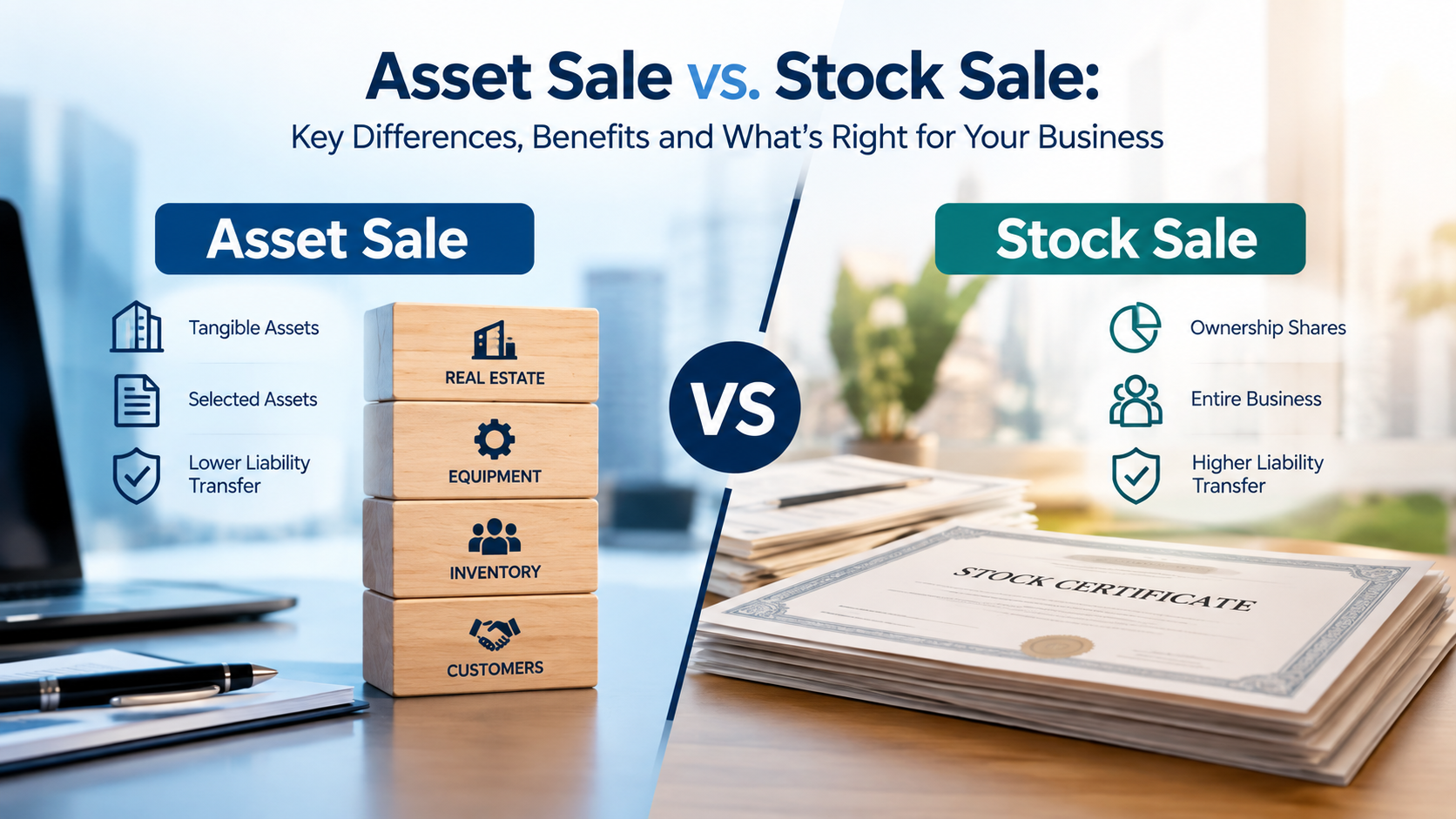
| Factor | Asset Sale | Stock Sale |
|---|---|---|
| What transfers | Specific assets selected by the buyer | The entire entity, including all liabilities |
| Liability | Buyer generally doesn’t assume undisclosed liabilities | Buyer inherits all known and unknown liabilities |
| Florida sales tax | May apply to tangible assets (6% + local surtax) | Generally not triggered |
| Seller tax treatment | Mix of ordinary income and capital gains based on allocation | Typically capital gains on the full sale price |
| Most common for | Small and mid-size Florida businesses, most LLCs | Larger companies and C-Corps |
Roughly 80–90% of small Florida business sales are structured as asset sales, largely because buyers want the liability separation and sellers usually keep the entity to wind down independently.
A cash buyer can close in as little as 30–45 days once due diligence is complete. An SBA 7(a)-financed deal typically adds 45–75 days for underwriting, appraisal, and lender-required valuation review — this is the single biggest variable in how long a Florida sale actually takes from LOI to close, and it’s worth confirming a buyer’s financing path before agreeing to exclusivity.
A signed purchase agreement means little if the commercial lease can’t be assigned to the buyer. Confirm assignability — and get landlord consent in writing — before going to market, not after a buyer is already under contract. Non-assignable leases are one of the most common reasons a Florida deal collapses at the last stage, after months of work on both sides.
A straightforward cash sale can close in 60–90 days from a signed LOI. Deals involving SBA financing, real estate, or multiple locations commonly take 4–6 months.
Business broker commissions generally run 8–12% for small businesses, often on a success-fee basis — the seller pays only if the deal closes. Fees trend lower as transaction size increases.
Most sellers use both. A broker markets the business, qualifies buyers, and negotiates price; an attorney handles the purchase agreement, liability protection, and closing. Neither role fully substitutes for the other in a Florida transaction.
It’s a Florida Department of Revenue confirmation that the business has no outstanding sales, reemployment, or corporate income tax liability. Most closing attorneys require it before releasing escrow funds, so requesting it early avoids a late-stage delay.
Yes — Florida’s buyer pool includes a significant share of out-of-state and international buyers, including those pursuing an E-2 visa. These buyers often need additional lead time for visa or relocation documentation, which is worth factoring into your closing timeline.
Tax clearance delays, non-assignable leases, and unqualified buyers are the most common reasons Florida business sales stall or close below asking price — issues a broker who works Florida deals daily catches before they become last-minute surprises. Florida Business Sellers works exclusively with Florida business owners on valuation, confidential buyer vetting, and deal structuring from listing through closing, so you can keep running the business while the sale is managed in the background.